
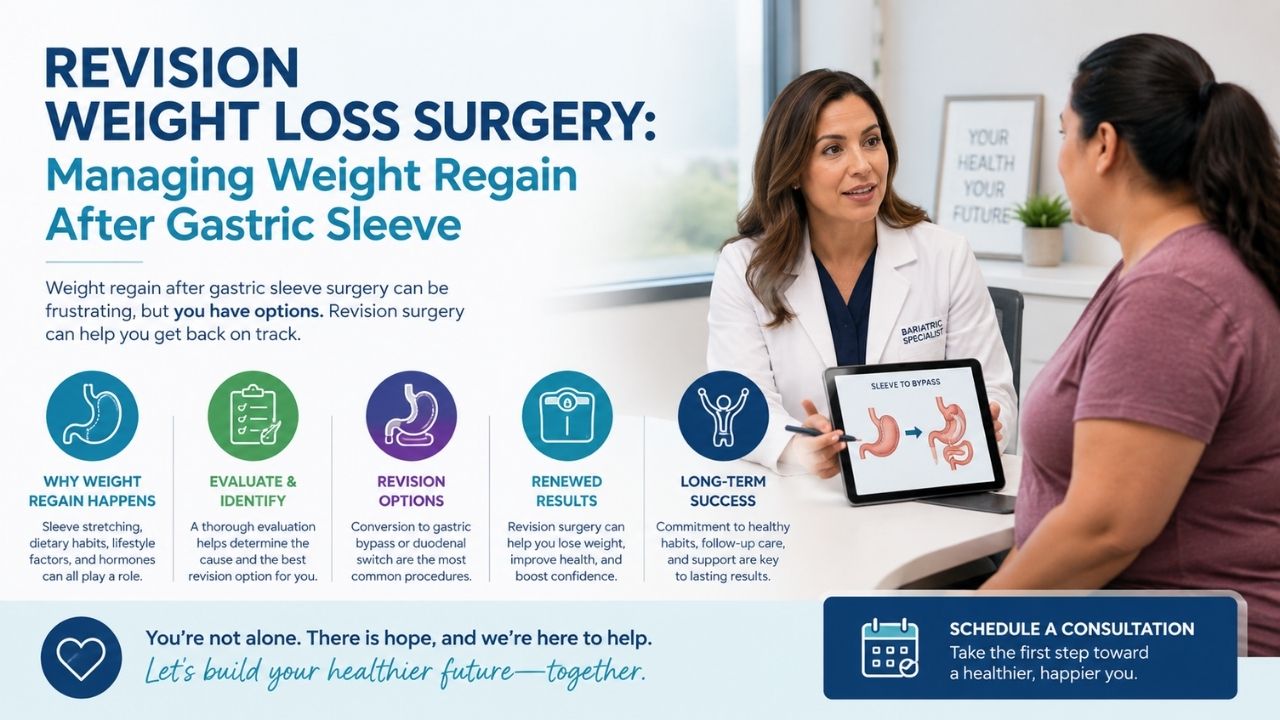
Experiencing weight recurrence after successfully navigating your initial bariatric milestone can bring a profound sense of psychological frustration, disappointment, and unearned anxiety. Many patients who worked hard to reach their target body goals feel an overwhelming sense of personal isolation when the scale begins to climb again. It is vital to understand that this pattern is a recognized medical phenomenon, and considering revision weight loss surgery is a structured, evidence-based next step rather than an indication of personal failure.
Why Does Weight Regain Occur After Achieving Your Ideal Weight?
Bariatric procedures provide an exceptional, highly effective anatomical advantage that fundamentally alters metabolic signaling and restricts capacity. However, these surgical changes do not permanently erase deeply ingrained behavioral triggers or long-term metabolic adaptations. Over time, the body naturally seeks to defend its historical weight set-point, making sustained management a lifelong commitment.
According to the clinical insights and patient observations shared by General Surgeon Dr. Güngör Gül, a notable portion of patients successfully reach their ideal weight milestones post-sleeve. However, an eventual relapse into old dietary habits, combined with a gradual failure to comply with structured nutritional protocols, can slowly trigger significant weight recurrence. When food portions gradually increase or high-calorie grazing behaviors return, the restricted stomach can accommodate more volume, reversing some of the primary metabolic benefits of the sleeve.
A Personalized Clinical Assessment for Every Patient
Addressing secondary weight gain requires looking beyond a single number on the scale. Because every metabolic journey is unique, managing weight recurrence cannot rely on a one-size-fits-all approach. A successful intervention depends entirely on understanding the specific timeline and metabolic behavior of each individual case.
As emphasized by Dr. Güngör Gül, before any secondary therapeutic pathway or revision procedure can be safely recommended, a comprehensive, individualized historical evaluation must take place. This complex diagnostic assessment relies heavily on analyzing three critical historical data points:
- Pre-operative Weight Baseline: Evaluating exactly how much the patient weighed before their very first bariatric procedure provides essential context regarding their long-term genetic, metabolic, and biological baseline.
- Total Weight Lost: Calculating the maximum amount of excess weight the patient successfully shed during their peak post-operative phase helps clinical teams determine how effectively the original gastric anatomy responded to the initial restriction.
- The Regain Velocity: Analyzing exactly how quickly or within what specific time frame the secondary weight gain occurred is paramount. A rapid increase in weight within a short period may point to distinct mechanical changes or sudden behavioral shifts that require immediate intervention.
When is Revision Surgery Required?
When secondary weight gain becomes clinically significant and lifestyle modifications no longer yield results, a revision weight loss surgery becomes the definitive path forward. Revision surgery is a specialized corrective procedure where the existing gastric sleeve anatomy is converted into a more metabolically active alternative, most commonly a Gastric Bypass. By changing the surgical mechanism from simple restriction to a combination of restriction and malabsorption, we re-establish metabolic control and provide patients with a powerful second chance to regain their health.
Clinical Metrics Reviewed Prior to Revision Surgery
| Evaluation Metric | Why It Matters Clinically | Impact on Treatment Selection |
|---|---|---|
| Initial Pre-Op Weight | Determines the patient’s genetic and metabolic baseline before any intervention. | Helps map out long-term realistic weight expectations. |
| Peak Weight Loss | Measures how well the original gastric sleeve tool functioned at its maximum efficiency. | Identifies whether the issue is structural or behavioral. |
| Regain Time Frame | Tracks how short or long it took for the weight to return. | Indicates whether an immediate surgical conversion (e.g., Bypass) is necessary. |
Frequently Asked Questions About Revision Bariatric Procedures
Is revision surgery more complex than the first gastric sleeve operation?
Yes, secondary bariatric procedures naturally carry a higher degree of technical complexity than a primary surgery. This is due to the presence of anatomical alterations, altered blood flow patterns, and surgical scar tissue remaining from the initial gastric sleeve. Because of this, revision procedures require an advanced level of surgical expertise, precise pre-operative planning, and an experienced bariatric surgical team to ensure optimal safety and success.
Why is a Gastric Bypass preferred as a revision option after a sleeve?
A Gastric Bypass is often considered the gold standard for revision because it introduces a dual-action mechanism. While the original sleeve relied solely on restricting the volume of food intake, converting it to a Gastric Bypass creates a smaller stomach pouch and reroutes a portion of the small intestine. This introduces a controlled element of nutrient malabsorption and triggers favorable changes in metabolic hormones, making it highly effective at overriding structural stretches or metabolic slowdowns.
Can I prevent weight regain without needing a second surgery?
In the early stages of weight recurrence, it is absolutely possible to halt or reverse the trend through structured non-surgical interventions. This process involves working closely with specialized bariatric dietitians to reset nutritional habits, addressing emotional or psychological eating triggers, and incorporating targeted medical weight management therapies. Surgery is generally reserved for cases where these intensive lifestyle modifications have failed to stop significant, clinically threatening weight gain.
What is the long-term success rate of revision bariatric surgery?
Clinical data shows that conversion to a Gastric Bypass yields excellent secondary success rates, with many patients successfully losing a significant percentage of their recurrent excess weight. However, the ultimate longevity of these results depends heavily on long-term behavioral alignment. Combining the structural benefits of the revision surgery with strict adherence to follow-up care and nutritional protocols ensures the most durable health outcomes.
Your Journey to Health Doesn’t End Here
Gaining weight back after bariatric surgery is a clinical challenge, not a personal failure. If you are struggling with weight regain or are looking for expert guidance on revision surgery options in Turkey, GST Clinic’s specialized medical team is here to design a personalized care plan for you. Contact us today for a compassionate, confidential consultation.
Disclaimer: Results may vary from person to person. Please consult your physician for detailed medical advice before undergoing any surgical or interventional procedure.
